Cognitive Reserve & Neuroplastic Longevity: Defending Synaptic Density Against Age-Related Cognitive Decline
Dementia does not begin in old age—it simmers silently in the brain thirty years before the first symptom. Discover the neurobiology of cognitive reserve, brain-derived neurotrophic factor (BDNF), and how to engineer lifelong mental sharpness.
Of all the indignities of biological aging, there is one prospect that terrifies human beings above all others: The Loss of One’s Mind.
To live to age ninety with an intact cardiovascular system and muscular strength, but to be stripped of your memories, executive judgment, sense of self, and the ability to recognize the faces of your loved ones, is a tragedy beyond measure. In the framework of Medicine 3.0, Alzheimer’s disease and vascular dementia are considered the cruelest of the Four Horsemen of chronic disease.
For decades, the dominant medical narrative treated neurodegenerative decline as an inevitable, genetically determined fate. If you inherited the APOE-ε4 genetic allele, it was assumed your fate was sealed.
Modern cognitive neuroscience, neuroimaging, and molecular neuropathology have shattered this fatalistic paradigm.
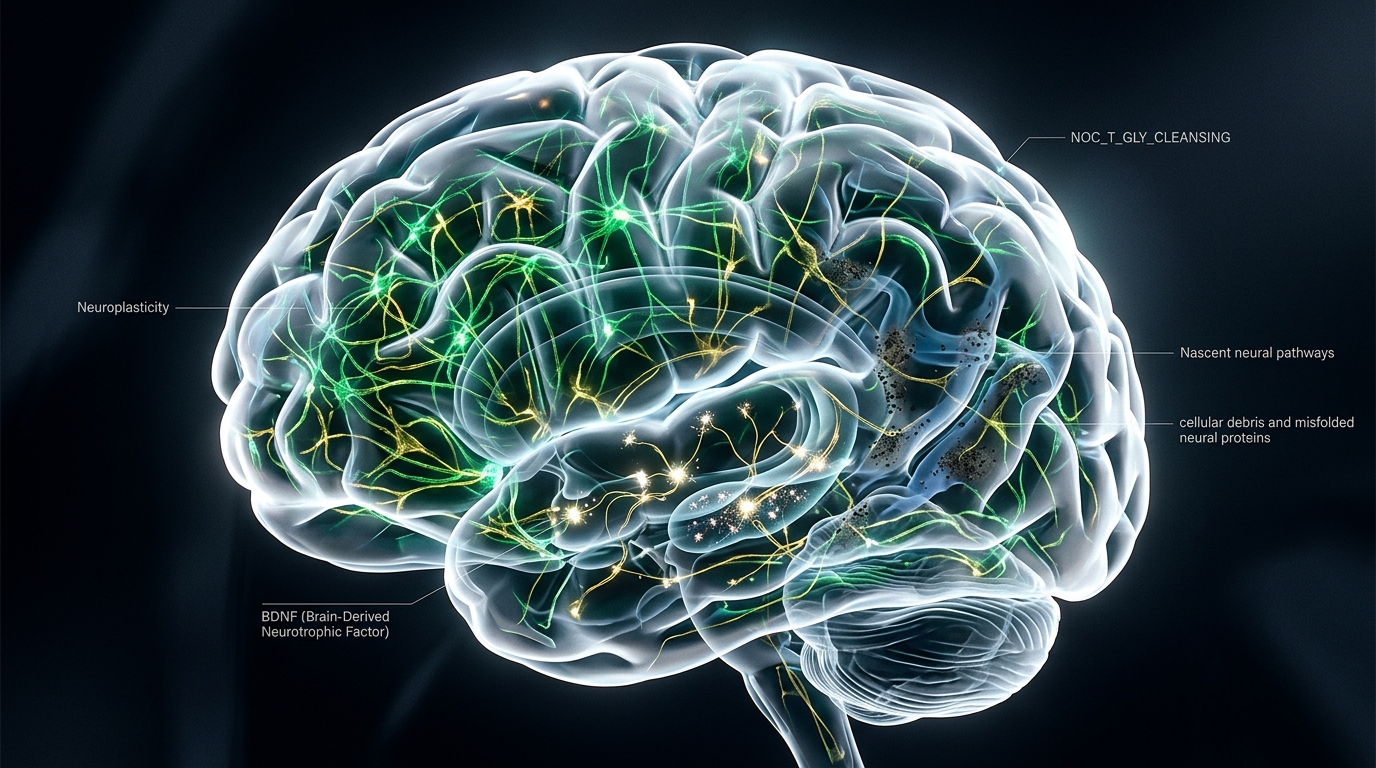
The revolutionary truth is that dementia takes twenty to thirty years to develop silently before the first momentary lapse of memory occurs. More importantly, researchers have uncovered a profound biological phenomenon: Cognitive Reserve—the brain's capacity to build redundant neural circuits, withstand extensive pathological insults (amyloid plaques and tau neurofibrillary tangles), and function with pristine clarity even in late life.
1. The Nun Study: The Discovery of Cognitive Reserve
The landmark scientific validation of cognitive reserve emerged from the historic Nun Study led by Dr. David Snowdon at the University of Kentucky (Snowdon et al., JAMA, PMID: 8632688).
Researchers followed a cohort of 678 School Sisters of Notre Dame nuns across several decades, conducting rigorous annual cognitive testing until death, at which point their brains were donated for comprehensive neuropathological autopsy.
The autopsy results stunned the global neurological community:
- Many elderly nuns whose brains were thoroughly riddled with severe Alzheimer's pathology—massive depositions of amyloid-beta plaques and extensive neurofibrillary tau tangles that would classically signify severe end-stage dementia—had displayed perfectly normal, sharp cognitive function up until the days of their death.
- How was this possible?
- In their youth and throughout their adult lives, these women had engaged in continuous intellectual pursuit, deep reading, teaching, linguistic complexity, and social collaboration.
- Their brains had woven such an extraordinary, dense web of synaptic interconnectivity (Synaptic Density) that when Alzheimer’s pathology destroyed thousands of neural highways, their brains effortlessly routed signals through millions of alternative synaptic back-roads without missing a single cognitive beat.
This buffer is Cognitive Reserve. You cannot completely stop time, but you can build a cognitive citadel so deep that neurodegenerative decay can never breach the fortress.
2. Brain-Derived Neurotrophic Factor (BDNF): Miracle-Gro for the Mind
At the cellular level, the primary biological catalyst for synaptic plasticity and neurogenesis is Brain-Derived Neurotrophic Factor (BDNF).
Synthesized in the hippocampus and cerebral cortex, BDNF promotes:
- Neurogenesis: Stimulating neural stem cells in the subgranular zone of the dentate gyrus to differentiate into brand-new, functioning neurons throughout adult life.
- Synaptic Plasticity: Strengthening long-term potentiation (LTP), the fundamental cellular mechanism of memory encoding.
- Neuronal Survival: Shielding mature neurons from oxidative stress, glutamate excitotoxicity, and ischemic apoptosis.
How to Trigger Massive Endogenous BDNF Release
- Zone 2 Cardio & Lactate Signaling: Vigorous aerobic exercise causes working skeletal muscles to produce and release Lactate. Lactate crosses the blood-brain barrier via monocarboxylate transporters (MCTs), acting directly on neurons to stimulate the SIRT1-PGC-1α-FNDC5 pathway, triggering the release of Irisin, which drives an exponential surge in hippocampal BDNF synthesis (Wrann et al., Cell Metabolism, PMID: 24120942).
- High-Intensity Interval Training (HIIT): Sprints produce rapid pulses of BDNF and vascular endothelial growth factor (VEGF), expanding hippocampal blood flow and capillary density.
3. The Glymphatic System: The Brain's Nocturnal Dishwasher
While the rest of the human body utilizes the lymphatic system to clear metabolic cellular debris, the central nervous system has its own specialized clearance architecture: The Glymphatic System, discovered by Dr. Maiken Nedergaard at the University of Rochester (Nedergaard et al., Science, PMID: 23929995).
- During waking hours, glial cells remain swollen, tightly packing interstitial space to maximize electrical signaling.
- During Deep Slow-Wave Sleep (NREM Stage 3), astrocytic water channels (Aquaporin-4 / AQP4) open wide, and glial cells shrink by 60%.
- Cerebrospinal fluid (CSF) rushes through the brain tissue like a high-pressure rinse cycle, washing away toxic daily byproducts—including soluble Amyloid-Beta monomers and hyperphosphorylated Tau proteins—and dumping them into the deep cervical lymph nodes.
If you chronically truncate your sleep window to five or six hours, you are skipping the brain’s cleansing wash cycle. Over thirty years, un-cleared oligomers aggregate into permanent, toxic fibrillar plaques that strangle neurons.
4. The 4-Pillar Clinical Protocol for Cognitive Healthspan
To safeguard your synaptic architecture and maintain razor-sharp executive function into your tenth decade:
| Pillar | Protocol | |
|---|---|---|
| 1 | Physical | 180 min/week Zone 2 cardio + 1 weekly VO2max session to surge systemic lactate, irisin, and hippocampal BDNF. |
| 2 | Sleep | Strict 7.5–8.5 hour nocturnal sleep window to maximize glymphatic AQP4 cerebrospinal fluid waste evacuation. |
| 3 | Mental | Novel cognitive friction: Learn a complex instrument, a new language, or advanced technical skills (avoid passive gaming). |
| 4 | Metabolic | Maintain pristine insulin sensitivity (HOMA-IR < 1.0) to avoid brain insulin resistance (Type 3 Diabetes). |
1. Conquer Brain Insulin Resistance ("Type 3 Diabetes")
The brain requires vast quantities of energy, consuming 20% of resting metabolic fuel despite accounting for only 2% of body mass. When chronic hyperinsulinemia damages brain capillary insulin receptors, neurons become starved of fuel—a condition researchers now classify as Type 3 Diabetes. Keep your HOMA-IR strictly under 1.0 and HbA1c between 4.8% and 5.3% through low-glycemic nutrition and circadian fasting.
2. Embrace High-Friction Cognitive Challenges
Passive brain-training apps on smartphones provide minimal real-world cognitive reserve. True neuroplastic remodeling requires intense cognitive friction:
- Learning to play a musical instrument (requires simultaneous auditory, visual, motor, and emotional synthesis).
- Fluently acquiring a non-native language with an unfamiliar alphabet.
- Engaging in strategic games like chess or complex software programming.
3. Maintain High Cardiovascular Capacity (VO2 Max)
Cardiorespiratory fitness is the single strongest physiological predictor of future cognitive healthspan. A high VO2 max ensures continuous microvascular perfusion to the prefrontal cortex, preventing the silent micro-strokes (lacunar infarcts) that cause multi-infarct vascular dementia.
Clinical & Neuroscience Research Citations
- Snowdon, D. A., et al. (1996). Linguistic ability in early life and cognitive function and Alzheimer's disease in late life: Findings from the Nun Study. JAMA, 275(7), 528–532. PubMed PMID: 8632688 | DOI: 10.1001/jama.1996.03530310034029
- Wrann, C. D., et al. (2013). Exercise stimulates the FNDC5/irisin-BDNF pathway in the hippocampus. Cell Metabolism, 18(5), 649–659. PubMed PMID: 24120942 | DOI: 10.1016/j.cmet.2013.09.008
- Xie, L., et al. (2013). Sleep drives metabolite clearance from the adult brain. Science, 342(6156), 373–377. PubMed PMID: 24136970 | DOI: 10.1126/science.1241224
- Stern, Y. (2012). Cognitive reserve in ageing and Alzheimer's disease. The Lancet Neurology, 11(11), 1006–1012. PubMed PMID: 23079557 | DOI: 10.1016/S1474-4422(12)70191-6
Recommended Reading
To construct an impregnable fortress of cognitive reserve, master Stoic emotional fortitude, and expand your neuroplastic potential:
- Marcus Aurelius — Meditations: A New Translation The supreme Stoic classic on mental mastery, internal locus of control, and shielding executive cognition from destructive reactive impulses.
- Peter Attia, MD — Outlive: The Science and Art of Longevity The indispensable clinical guide detailing the prevention of neurodegenerative disease, APOE-ε4 risk mitigation, and the power of cardiovascular fitness.
- Carol S. Dweck, PhD — Mindset: The New Psychology of Success The groundbreaking neuroscientific and psychological exploration of the Growth Mindset, showing how the belief that intellect can be expanded drives lifelong neuroplasticity.
Actionable Longevity Checklist: Next Steps
Scientific insights have maximum power when translated into micro-habits. Check off your daily targets:
Log in Habitspan Daily Protocol (15s)
Lock your 4 biological pillars daily with zero friction and zero tedious data entry.
Calculate Your Biological Cell Age
Assess your functional longevity score against chronological birth age using Medicine 3.0 metrics.